The glossary you are about to read is about my field of study which is Social science. In my program, we have anthropology, psychology and history classes that help us to learn about all kinds of aspects related to human beings.
cognitive dissonance
noun
The state of having inconsistent thoughts, beliefs, or attitudes, especially as relating to behavioral decisions and attitude change.
Example: Aronson and Mills (1959, cited in Brown 1988) drew on Festinger's cognitive dissonance theory to claim that the more severe an initiation to a group, the higher the members' evaluations of that group are after joining.
en: dissonance cognitive
dissociative disorder
noun
Dissociative disorders (DD) are conditions that involve disruptions or breakdowns of memory, awareness, identity, or perception.
Example: People with dissociative disorders escape reality in ways that are involuntary and unhealthy and cause problems with functioning in everyday life.
en: trouble dissociatif
egocentrism
noun
Self-centeredness is characterized by a tendency to bring everything back to oneself.
Example: This has implications for children who do not have the opportunity to socialise at an early age as may not completely abolish the notion of egocentrism.
en: l'égocentrisme
ethnocentrism
noun
Evaluation of other cultures according to preconceptions originating in the standards and customs of one's own culture.
Example: The scale consisted of 30 items covering such issues as obedience & respect for authority, aggression towards deviant groups such as homosexuals, and general ethnocentrism.
en: ethnocentrisme
expressive language disorder
noun
Expressive language disorder is a communication disorder in which there are difficulties with verbal and written expression.
Example: Expressive language disorder affects work and schooling in many ways. It is usually treated by specific speech therapy, and usually cannot be expected to go away on its own.
en: trouble du langage expressif
halo effect
noun
The tendency for an impression created in one area to influence opinion in another area.
Example: One common halo effect is when the perceived positive features of a particular item extend to a broader brand.
en: effet de halo
hypermnesia
noun
Unusual power or enhancement of memory, typically under abnormal conditions such as trauma, hypnosis, or narcosis.
Example: Tanny's hypermnesia allowed her to remember that her apple was 3 weeks, 2 days, 3 hours, and 20 minutes off the tree.
en: hypermnesie
illness
noun
A disease or period of sickness affecting the body or mind.
Example: As when he was a small boy he carried out compulsive religious rituals and as a man he suffered from obsessions concerning illness, his appearance and sexual urges (Gardiner, 1973a).
en: maladies
intrapsychic conflict
noun
A mental struggle arising from the clash of incompatible or opposing impulses, wishes, drives, or external demands.
Example: One form of intrapsychic conflict is when two drives compete with each other.
en: conflit intrapsychique
mental disability
noun
A mental disorder, also called a mental illness or psychiatric disorder, is a behavioral or mental pattern that causes significant distress or impairment of personal functioning.
Example: People with a physical or mental disability experience conditions within the individual that are barriers to participation in occupations, because an external agent is doing the depriving.
en: maladie mentale
narcissism
noun
Excessive interest in or admiration of oneself and one's physical appearance.
Example: It is these severe psychological disorders which cannot be treated by a strictly behavioural approach - although behaviour modification can help with some effects, there is no effective therapy for narcissism itself, (Young, 1990).
en: narcissisme
nonverbal communication
noun
Psychol those aspects of communication, such as gestures and facial expressions, that do not involve verbal communication but which may include nonverbal aspects of speech itself (accent, tone of voice, speed of speaking, etc).
Example: The first, and most obvious, clue to nonverbal communication is a person's facial expressions.
en: la communication non verbale
paranoia
noun
Character disorders (delirium of persecution, excessive pride, impossibility of not bringing everything to yourself) which can lead to mental illness (paranoid psychosis).
Example: A person's race may result in them being persecuted by the homogenous group in society and this could be a cause of paranoia and distress.
en: paranoïa
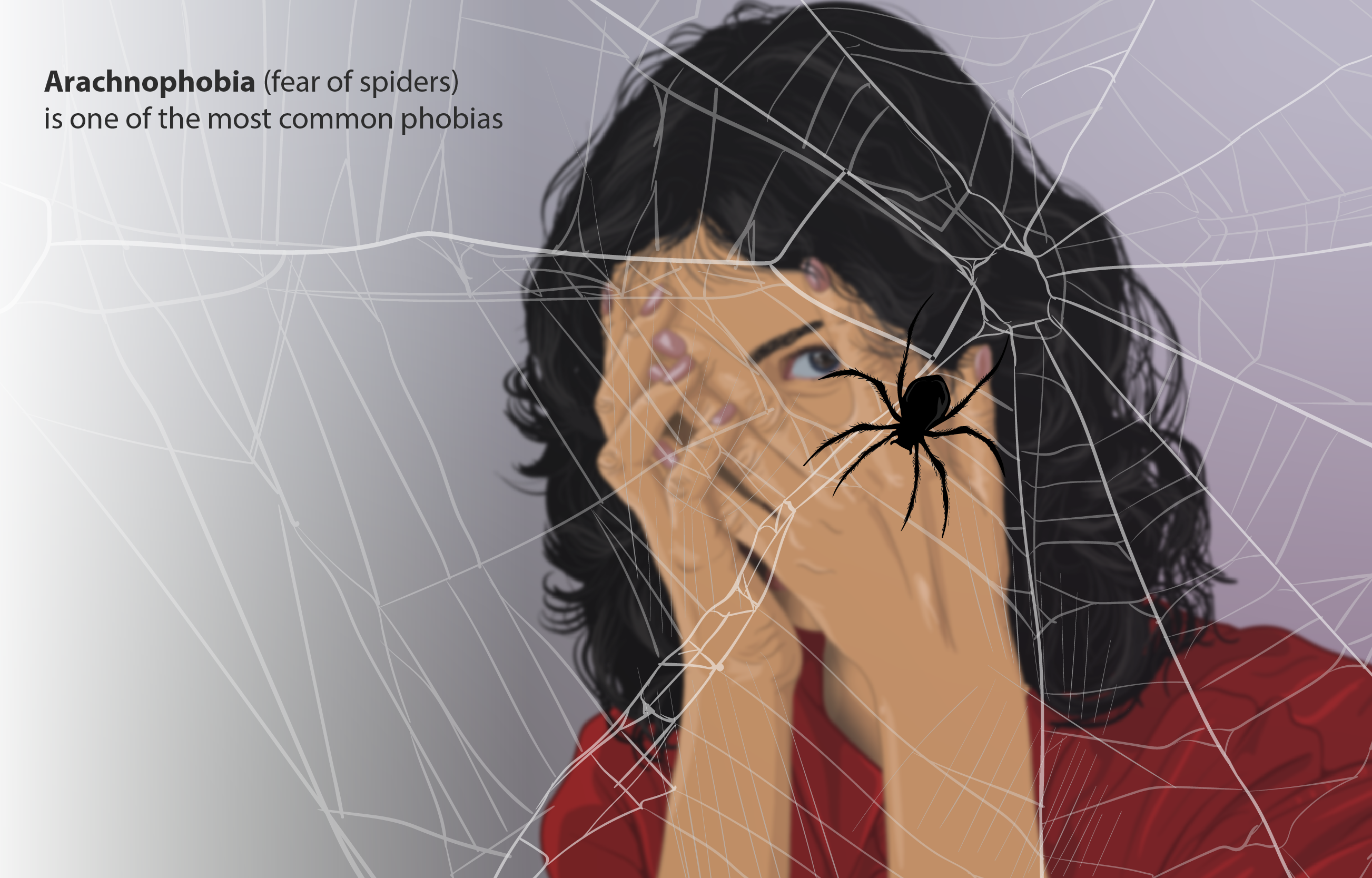
phobia
noun
An extreme or irrational fear of or aversion to something.
Example: "Wolf-Man" as Pankejeff was later referred to in Freud's case studies, was diagnosed by Freud as having an anxiety neurosis, an animal phobia in early childhood, compulsive feelings complete with obsessive rituals, attacks of furious rage and neurotic sexual conduct.
en: phobie
prejudice
noun
An unfavorable opinion or feeling formed beforehand or without knowledge, thought, or reason.
Example: People with this personality type are said to be prejudice against minority groups and believe strongly in obeying authority.
en: préjudice
profiling
verb
The recording and analysis of a person's psychological and behavioral characteristics, so as to assess or predict their capabilities in a certain sphere or to assist in identifying a particular subgroup of people.
Example: Primarily, profiling and monitoring helps to build up a population profile of health inequalities, allowing doctors to see the extent of health and social problems.
en: profilage
psychoanalysis
noun
A system of psychological theory and therapy which aims to treat mental disorders by investigating the interaction of conscious and unconscious elements in the mind and bringing repressed fears and conflicts into the conscious mind by techniques such as dream interpretation and free association.
Example: Popper used it to show that Freud's psychoanalysis was non-science because any behaviour could be explained by the theory and so there could be no refutation.
en: psychanalyse
psychology
noun
The scientific study of the human mind and its functions, especially those affecting behavior in a given context.
Example: Geoffrey Chaucer reflects this new psychology for a more temporal life in his Canterbury Tales, choosing to barely mention any pestilence and focus instead upon the pleasures of life and comic anecdotes.
en: psychologie
psychosis
noun
A severe mental disorder in which thought and emotions are so impaired that contact is lost with external reality.
Example: Studies by anthropologists have found that in countries where individuals suffering from a psychosis are treated within the community by members of that community, rates of recovery are very favourable (Warner 1996).
en: psychose
schizophrenia
noun
A long-term mental disorder of a type involving a breakdown in the relation between thought, emotion, and behavior, leading to faulty perception, inappropriate actions and feelings, withdrawal from reality and personal relationships into fantasy and delusion, and a sense of mental fragmentation.
Example: It has been shown that unpopular children are more likely to have psychological difficulties such as schizophrenia, anxiety disorders, mood disorders and criminal behaviour (Kupersmidt, Coie and Dodge, 1990).